Empowerment Projects

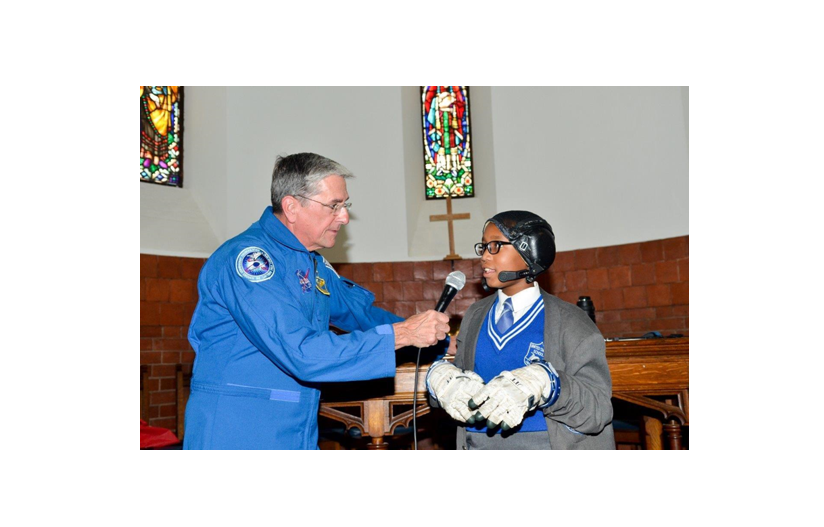
In partnership with our implementation partners, One On One Community Based Programmes was able to host NASA Astronauts in Gauteng, Western Cape and KwaZulu Natal Provinces – with Limpopo Province listed for the same intents and purpose for the first time in 2026.

All the astronauts hosted have been to space, with their role being to make sense of STEM to pre-tertiary learners, as well as encourage them to study Gateway Subjects instead of migrating to less challenging subjects which do not only contribute to high levels of unemployment but rather increase unemployability percentages which as less commentated on in education circles.

Scheduled to visit South Africa during the month of July 2026 which has been dedicated as Science Month in South Africa is NASA Astronaut NASA Astronaut Dorothy “Dottie” Metcalf-Lindenburger who walks in the footsteps of Astronauts Dr. Don Thomas and Nicole Stott

Problem Areas

Maths and science are subjects selectively categorized and approved by the cabinet as gateway subjects. This notion should also be borne by learners who would like to further their studies in these subjects with a view to either work or realize their careers in the engineering, actuarial; natural sciences, information technology and medical fields. Passing these subjects convincingly is therefore a requirement for acceptance by institutions of higher learning in these fields.

We also know fully well that the state of education in South Africa has over time been a contentious issue, but we simultaneously know very well that talk is cheap – especially where remedial action is either missing or non-existent from social referees. It is for this reason that the primary aim of One On One Community Based Programmes is to add value to the South African society through all meaningful interventions in the educational sector, and has to this point focused its intervention endeavours on STEM subjects

As “Gateway” subjects are categorized as such by cabinet, mathematics and science are pivotal to the pursuit of professions that require these subjects for qualification purposes. Social referees have over the years amplified the problem without any suggestions regarding solutions, which is why a holistic intervention is needed to address these challenges head-on.

Science and Chemistry

Research results from the work done by Prof. Corrie du Toit (University of the North West) in 2011, a year before the publication published in the Volksblad newspaper dated 15 March 2012 (page 7);confirmed that only 3772 of the 24000 public schools in South Africa had laboratories the year before the publication – a gap that may not be closed overnight but which requires appropriate action to offset the perpetual downside.

This further explains the error of judgment in making learners focus only on the theoretical aspects of learning without any practical input for completion purposes and holistic outcomes. We at One On One Community Based Programmes have indeed observed over time that learners do not do well in science and chemistry in instances where they are not given the opportunity “TO DO SCIENCE” through experiments in the classroom, but are instead made to focus on only the theoretical aspects. That is in part what going to schools is for, but there is more that can be done to convert problems like these into programs.

The laying on of a good foundation enables learners to follow those streams requiring physical sciences and mathematics; without which alternative but undesirable options are adopted for all the wrong reasons (for example Maths Literacy instead of high-grade Mathematics pass required for STEM streams at tertiary levels).

Our Solution

One On One Community Based Programmes would be first to acknowledge the fact that improvement of the status quo is always envisaged and expected, and that solutions presented will be in response to current challenges experienced by learners and practitioners alike as they evolve over time.

Our solutions are also geared to reduce or at bare minimum to reverse the drop-out rates which are never used as headline news as the absence of accountability would actually cause more challenges as this would have occurred across various & different administration tenures.

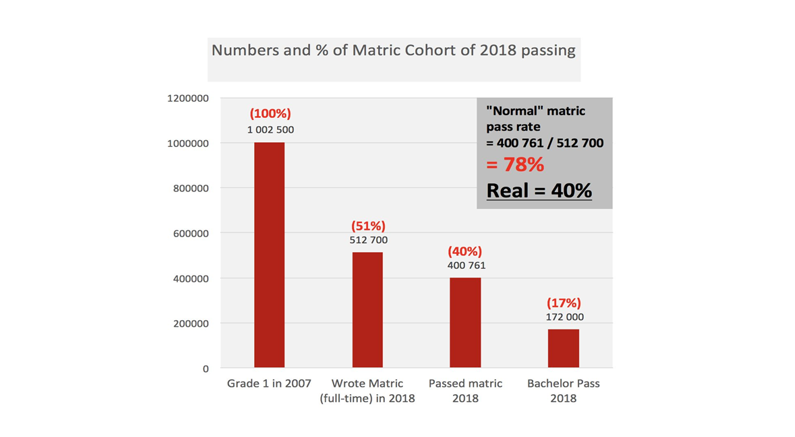
Below please find an old but appropriate demonstration of actual statistics which speaks volumes without taking into consideration the quality of subjects taught in SA at pre-tertiary level:

Numbers and % of Matric Cohort of 2018 passing

Numbers and % of Matric Cohort of 2018 passing


Mathematics

Mathematics

One On One Community Based Programmes establishes partnerships with the private sector to provide extra curricula lessons for Grades 7 – 12 for Maths projects - Starting in Philippi (Cape Town, Western Cape province), followed by Yeoville (Johannesburg, Gauteng province) and Mogwase (Rustenburg, North West Province) – over weekends and weekdays as part of the schools’ standard daily school teaching schedules.


Numbers and % of Matric Cohort of 2018 passing

Physical Science

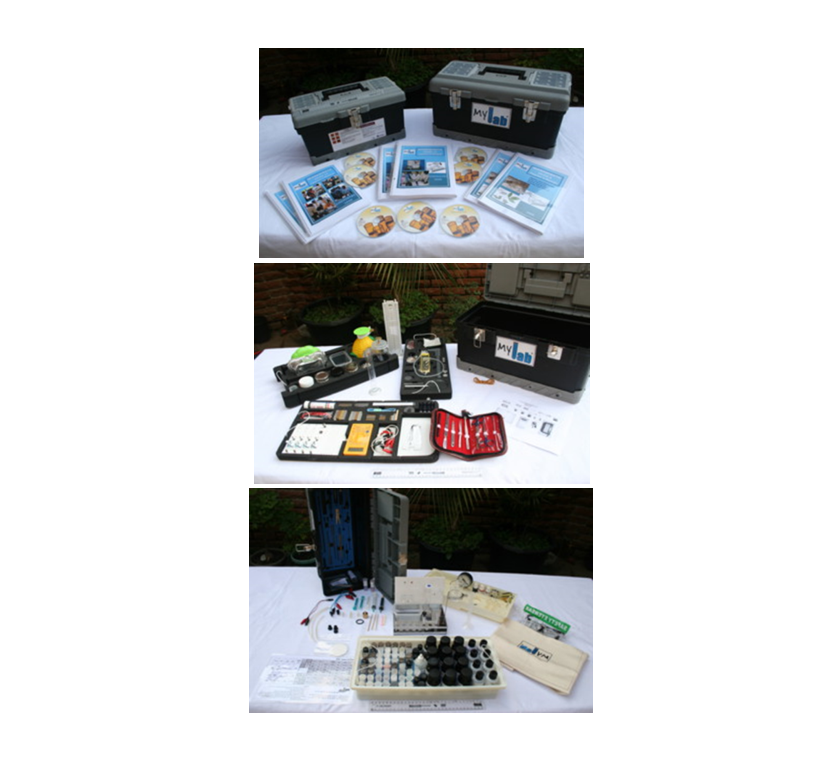
We now know that learning science does not always require fancy school infrastructure, especially that some of the schools in certain quintiles are disadvantaged through budgetary restraints. But, with the availability of the Mylab Portable Laboratories as part of the solution; learners are enabled and empowered to perform experiments anywhere they would be able to do so. This means in summary that “Form will follow function”

The fact that One On One Community Based Programmes works with the original inventors; developers and patent holders of the Mylab concept and related portable kits from the University of the North West provides users with access to the intellectual capital behind the development and the reasons for their development.

The work put into the Mylab kits focuses both teachers and learners on “doing science” in the classroom, thereby making the learning experience engaging and committing with an element of fun in the process.

The teaching and learning aids provided in the form of instruction modules and DVDs for both teachers and learners save a lot of preparation time and thus enable learners to use their spare time for other subjects which may just be of equal importance to both user categories.


Numbers and % of Matric Cohort of 2018 passing

Mylab Chemistry and Natural Science Kits

The poor average percentage achieved in Chemistry by grade 12 pupils in many developing countries over the past years can be attributed to various factors, with one of the most important being motivation. But motivation or lack thereof could be attributed to inadequate teaching strategies or methodologies which do not enhance practical learner involvement which becomes a stepping stone to better understanding of basic concepts at visualization level.

As one of the most important interventions, we are assured that historical challenges are being addressed and mitigated against for future repeats. By design, this is a product of many years of development by well qualified and experienced North-West University Science Faculty professionals, with its success attributable to course lecturers, facilitators and learners, continued presentations, workshops and congresses done at continental and international forums.

Some of the historical global participations which are made possible by invitation included the following for reference purposes – eg: Budapest, Hungary (August 2000), Beijing, China (August 2002), Istanbul, Turkey (August 2004), Seoul, South Korea (August 2006), Vienna, Austria (April 2001), Linz, Austria (April 2003), Eisenstadt, Austria (April, 2005), Leoben, Austria (April, 2007), Hong Kong Baptist University (December, 2001). Mexico City, Mexico (18-20 May 2005) Maseru, Lesotho (January 2008) Bloomington, Indiana (July, 2008) Safed, Israel (8 – 11 Sept. 2008).


Below please find an old but appropriate demonstration of actual statistics which speaks volumes without taking into consideration the quality of subjects taught in SA at pre-tertiary level:

• Prof John Kotz of the State University New York, author of the first level Chemistry textbook which is used over the world – visited the Mylab team in 2006 and did presentations and workshops in the North West Province

• Prof Lise Kvittingen and Mr. Per-Odd Eggen from the Norwegian University of Science and Technology, Trondheim, Norway – visited the Mylab team in 2006 and 2007. Over and above their involvement in the province, they both introduced the Mylab kit solution to Ethiopian schools for use in the Norway/Ethiopia chemistry project in chemistry, as well as export the Mylab kits in 2008 to Norway to be used in Norwegian schools.

As part of the local historical success evidence, the Quality Assurance Chief Directorate led by Mr JAT Tholo and his team gave the following feedback following the equipping of 455 schools and 4000 science learners by the North West Department of Education over the 2003-2006 period:

“The project has been successful in most aspects and is a model for education / industry partnerships. North West University is to be applauded for their foresight in establishing this programme in 2003. There are significant quantitative advantages to learners in studying chemistry through the NWU modules. Project material should continue to be developed with consideration given to the directions as indicated in the national curriculum, and the project should be more widely implemented within the province. The management of the project should be transferred to the provincial department of education. The project model should be used in the development of chemistry education resources for primary and middle school educators.”

One On One Community Based Programmes therefore believes as well as support the premise that making Mylab General Science and Chemistry kits available to public schools in SA would resolve the numerous problems affecting the quality of outputs in terms of and including quality matriculation pass rates.

Maths Support Programmes
Ten years later in 2025, the Maths Support Programmes still changes lives … The Maths Support Programmes project was initiated in 2007 in line with the vision “to achieve a positive impact on the South African community by multiplying the number of local participants for purposes of actively growing the South African economy.” To date, thousands of students have been directly involved as well as benefited from the original programs in Philippi (Western Cape Province) and Yeoville (Gauteng Province) respectively before replicating the same approach in Mogwase (North West Province) and Mankweng (Limpopo Province) within sight whilst primarily catering for students within the Grades 7-12 range in all provinces.

Often the mandates are issued by Provincial Departments of Education based on prevailing unsatisfactory outcomes with the intention to turn the tide around in both quality and results. Our prior experiences showed that intervention is not only required for learners as the need to retrain the educators became apparent when the actual mandate was initially focusing on learners. It would be futile to expect excellence from learners if the guides or educators do not know much to impart to others both theoretical and practical solutions.
Overall, the characteristics of such intervention programs would comprise of the following (either rolled out over weekends and holidays or as an overlay upon the standard schooling time tables or rosters:
• Assist learners to develop foundational and conceptual framework at lower grades thus enabling learners to progress with the necessary cognitive input background.
• Turn around as well as positively affect provincial performance in terms of matriculation results as province s do deem their incumbents to be performing at below-par levels comparatively speaking.
• Produce a marked increase in the number of quality passes in all applicable schools which form project cohorts.
• Encourage learners to study pure Mathematics (especially Higher Grade) instead of Maths Literacy which over time limits the learners’ choices of streams from a specialization perspective.

Annual Ancillary Programmes
The following are projects on One On One Community Based Programmes calendar:
• Skills Development programs in partnership with appropriate implementation partners
• Launching of Computer Laboratories to enhance Digital Literacy for learner preparation of tertiary expectations
• Health Day in partnership with public/private health practitioners at participating schools, with the key program being eye-care (from testing through diagnosis to provision of spectacles)

Our Goals

The team assembled to lead One On One Community Based Programmes comprises of different skill sets to enhance a holistic delivery of solutions to educators and learners alike.
One On One Community Based Programmes therefore seeks to achieve the following goals over the next ten years:
Work towards the provision of adequate and effective teaching at pre-tertiary level of all core subjects inclusive of mathematics, science; accounting and other pertinent subjects over time.
Increase the number of quality passes in all core subjects including mathematics, science; accounting and other pertinent subjects categorized as Gateway Subjects over time.
Ensure that the introduction of the new curriculum that raised the cognitive demand of core subjects in 2006 be addressed through the provision of extra curricula classes to close gaps created by weak foundations carried forward from lower grades.
Provide “open days and career guidance” opportunities to enable learners to choose career paths and fields of study earlier whilst intervention mechanisms are still available and applicable.
Ensure effectiveness of public private partnerships to create employment opportunities for interns and retired professionals through learner training projects aimed at pre-tertiary level of education.

Numbers and % of Matric Cohort of 2018 passing

Empowerment Project

In partnership with our implementation partners, One On One Community Based Programmes was able to host NASA Astronauts in Gauteng, Western Cape and KwaZulu Natal Provinces – with Limpopo Province listed for the same intents and purpose for the first time in 2026.

All the astronauts hosted have been to space, with their role being to make sense of STEM to pre-tertiary learners, as well as encourage them to study Gateway Subjects instead of migrating to less challenging subjects which do not only contribute to high levels of unemployment but rather increase unemployability percentages which as less commentated on in education circles.

Another NASA Astronaut Dorothy “Dottie” Metcalf-Lindenburger is scheduled to visit South Africa in July 2026, and would be walking in the footsteps of Astronauts Dr. Don Thomas and Nicole Stott